Our History.
Putnam Heights is more than just an Oklahoma City neighborhood; it is a living chronicle of the state’s political, legal, and architectural history. Established at the turn of the 20th century by visionary Israel M. Putnam, this historic district has been the chosen home for Governors, State Supreme Court Justices, and the architects who designed the Oklahoma State Capitol. Today, Putnam Heights remains a premier residential enclave where a diverse collection of historic homes ranging from grand Tudor estates to charming Mission-style villas meets a community deeply committed to preservation, beautification, and civic service.
-
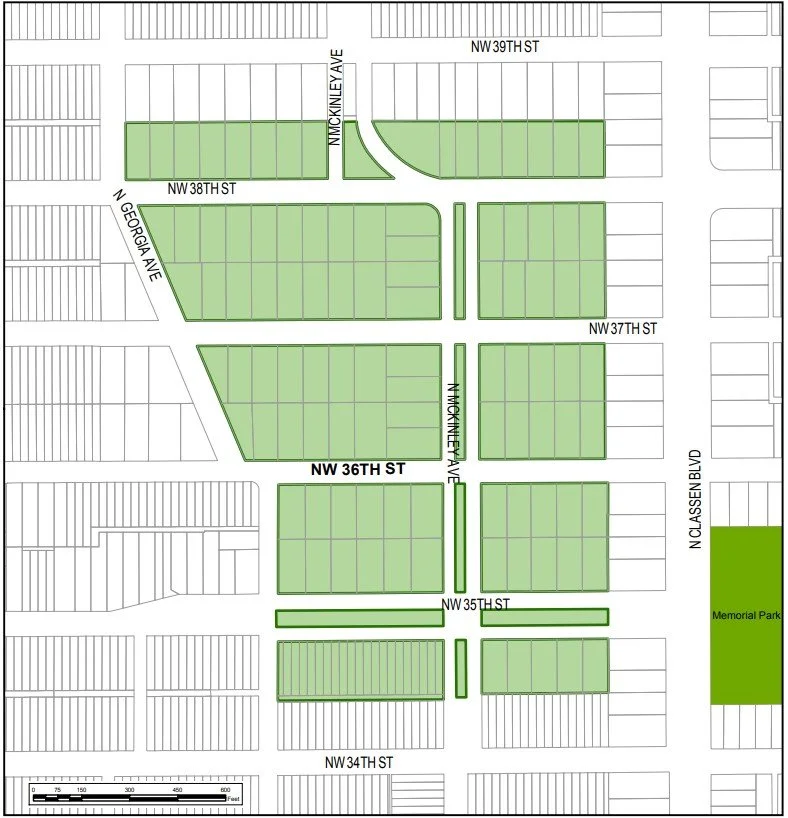
Putnam Heights stands as one of Oklahoma City’s most prestigious residential districts, a 104-home enclave spanning from NW 35th to NW 38th Streets. The neighborhood is a living gallery of early 20th-century craftsmanship, showcasing a rich diversity of architectural styles including English Colonial, Spanish Mission, Tudor, and Prairie. Founded on a commitment to excellence, this area has spent over a century serving as the preferred residence for the civic and professional leaders who shaped the state of Oklahoma.
-
The neighborhood was forged by the ambition of Israel M. Putnam, a real estate pioneer who moved to the city in 1901 and later authored the resolution to relocate the state capital from Guthrie. Under his guidance, the area became an epicenter for political and legal influence. It housed the state’s first attorney general and provided the official Governor’s Mansion for J.B.A. Robertson in 1919. The neighborhood's literal foundation was designed by architectural legends like Solomon Layton, the man responsible for the Oklahoma State Capitol itself.
-
As the city grew, the residents of Putnam Heights transitioned from building a community to protecting its heritage. This era was defined by a shift toward formal recognition, resulting in the area being granted historic preservation district status in 1972 and a place on the National Register of Historic Places in 1982. During this period, the neighborhood association was incorporated to ensure the district’s character remained intact while continuing to house figures of national significance, including federal judges who presided over some of the era's most famous criminal trials.
-
Today, Putnam Heights is a model of civic activism and urban beautification. Modern residents continue the tradition of service, holding high-ranking roles in the state legislature and local government while actively maintaining the district’s aesthetic charm. Through the support of the Anderson Family Endowment and various community grants, the neighborhood has seen the installation of historic-style lighting, traffic-calming streetscapes, and the planting of tens of thousands of daffodils. Every homeowner now serves as a steward of this heritage, preserving the landmark qualities that make Putnam Heights a premier historic region.
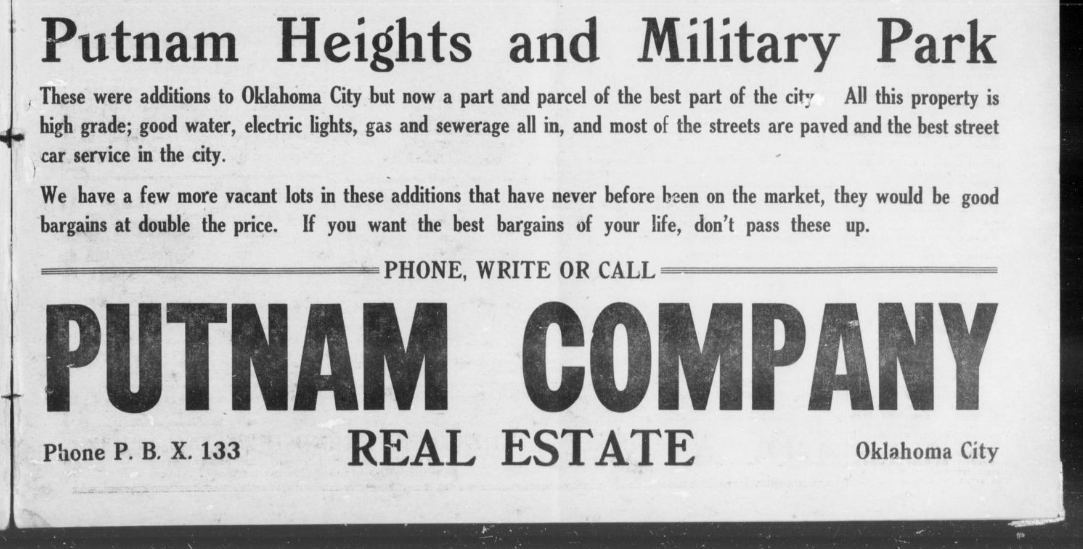
“Special attention is called to our most popular addition, Putnam Heights. To reach this area, take a University car to Putnam Heights or a Belle Isle car to 38th Street. Pay five cents only. Putnam Heights is located within the five cent fare district.”